Florida Security Deposit Law and the 15/30-Day Deadline
Under Fla. Stat. 83.49 a landlord has 15 days after the tenancy ends to return your deposit in full, or 30 days to send written notice of a claim in the exact statutory form. Missing the 30-day deadline forfeits the right to impose a claim. Here is the full mechanism.
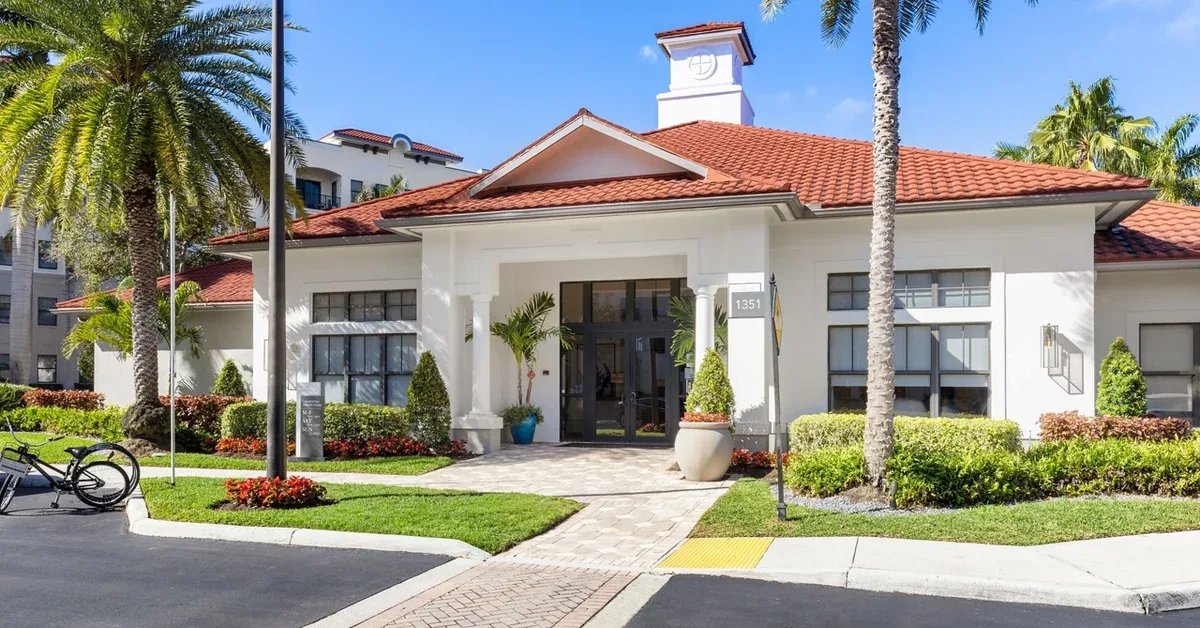
Florida sets no cap on a security deposit and protects the money with a deadline instead. Under Fla. Stat. 83.49 a landlord has 15 days after the tenancy ends to return the deposit in full, or 30 days to send written notice of a claim against it. Miss the 30 days and the statute says the right to impose a claim is forfeited.
The 15/30 rule, which is the whole of the law
Fla. Stat. 83.49(3)(a) sets both clocks from the same moment: the termination of the rental agreement. If the landlord does not intend to impose a claim, the deposit, with any interest owed, must be returned within 15 days after termination.
If the landlord does intend to claim, the deadline is 30 days. Within 30 days after termination the landlord must give written notice of the intention to impose a claim and the reason for it, by certified mail to the tenant's last known mailing address or by e-mail in accordance with Fla. Stat. 83.505.
The notice has a prescribed form. Fla. Stat. 83.49(3)(a) requires a statement in substantially this shape: "This is a notice of my intention to impose a claim for damages in the amount of ____ upon your security deposit, due to ____ ... You are hereby notified that you must object in writing to this deduction from your security deposit within 15 days after the time you receive this notice or I will be authorized to deduct my claim from your security deposit."
The penalty for missing the 30 days is the heart of the section. A landlord who fails to give the required notice in time "forfeits the right to impose a claim upon the security deposit and may not seek a setoff against the deposit but may file an action for damages after returning the security deposit to the tenant." The deposit comes back, and any damage dispute becomes a separate lawsuit with the money already in your hands.
One thing you must do to keep that protection. Fla. Stat. 83.49(5) requires a tenant who leaves before the end of the term, or who holds a periodic tenancy, to give at least seven days' written notice by certified mail or personal delivery, including an address where you can be reached. Fail to give it and the landlord is relieved of the subsection (3)(a) notice requirement.
Your 15 days to object, and what the clock does next
Fla. Stat. 83.49(3)(b) gives you 15 days from receipt of the landlord's notice to object in writing to the claim or its amount. Object, and the landlord cannot simply deduct. Say nothing, and the landlord may deduct the claim and must remit the balance within 30 days after the date of the notice.
Missing that window is not fatal. The same paragraph states that a failure to object in time "does not waive any rights of the tenant to seek damages in a separate action". You lose the fast route, not the claim.
Costs follow the result. Fla. Stat. 83.49(3)(c) provides that where either party sues over the right to the deposit, the prevailing party receives court costs plus a reasonable attorney's fee, and the court must advance the cause on the calendar. That cuts both ways.
No cap on the amount, which makes the sum worth checking
Nothing in Fla. Stat. 83.49 limits how much a landlord may take. Florida has no equivalent of the one-month ceiling some states impose, so the amount is whatever the rental agreement says: a term to negotiate rather than a number set by law.
One Boynton showed 27 homes across 14 floor plans on 13 October 2026: one-bedroom $2,263 to $2,458 at 890 to 1,032 square feet, two-bedroom $2,525 to $3,065 at 1,103 to 1,432 square feet, three-bedroom $3,174 to $4,102 at 1,368 to 2,000 square feet.
On a $2,500 apartment, one month's rent is $2,500. Because no statute caps it, two months on the same home would be $5,000 and three months $7,500, and all three would be lawful. Read the figure in the lease, not the figure you expected. Current availability is on the One Boynton community page.
There is a statutory alternative worth asking about. Fla. Stat. 83.491 lets a landlord who requires a deposit offer a fee in lieu of one, and subsection (3) requires written notice that the tenant may pay a deposit instead at any time.
Where your money has to sit, and the notice you should already have
Fla. Stat. 83.49(1) gives the landlord exactly three choices. A separate non-interest-bearing account in a Florida financial institution for the tenant's benefit. A separate interest-bearing Florida account, in which case the tenant receives at least 75 percent of the annualized average rate payable on it, or 5 percent per year simple interest, whichever the landlord elects. Or a surety bond with the clerk of the circuit court, in the amount of the deposits held or $50,000, whichever is less, plus 5 percent simple interest to the tenant.
In the first two cases the statute bars commingling: the landlord "shall not commingle such moneys with any other funds of the landlord or hypothecate, pledge, or in any other way make use of such moneys until such moneys are actually due".
The interest arm is a real number. On the 5 percent simple interest option a $2,500 deposit earns $125 over a year, and Fla. Stat. 83.49(9) requires interest to be paid to the tenant or credited against the current month's rent at least once annually.
You should have been told which method applies. Fla. Stat. 83.49(2) requires the landlord, in the lease or within 30 days of receiving the deposit or advance rent, to give written notice naming the depository and its address, or confirming a surety bond, and stating whether the tenant is entitled to interest. It must also carry the statutory disclosure beginning "YOUR RENTAL AGREEMENT REQUIRES PAYMENT OF CERTAIN DEPOSITS." A landlord renting fewer than five dwelling units is exempt from that notice.
E-mail only counts if you signed for it. Fla. Stat. 83.505 permits notices under this part by e-mail only where the parties signed an addendum specifically agreeing to it, each gave a valid address, and the addendum conspicuously states the election is voluntary and revocable. Such a notice is deemed delivered when sent unless it bounces.
Renewing resets the clock. Fla. Stat. 83.49(6) treats a renewal as a new rental agreement and any deposit carried forward as a new deposit, so a move between One Boynton floor plans starts the sequence again.
Normal wear and tear: Florida does not define it
Read the whole of Chapter 83 and the phrase barely appears. "Normal wear and tear" occurs nowhere in Fla. Stat. 83.49, nor in Fla. Stat. 83.43, the definitions section. Its only appearances are inside Fla. Stat. 83.491, the fee-in-lieu section, and even there it is left undefined.
What follows is practical, not theoretical. With no statutory definition and no list, whether a mark on a wall is wear or damage is decided on the evidence, by a county court judge if it gets that far. No provision says carpet lasts five years.
So the dispute is an evidence contest. Fla. Stat. 83.49(3)(a) requires the landlord's notice to state the reason for the claim, and Fla. Stat. 83.49(3)(c) puts costs and fees on the losing party. Dated photographs of each room at move-in and move-out are the only part of that record you control: floors, worktops, appliance interiors, bathroom grout, window tracks and every wall, kept with the signed move-in condition form.
Rent, late payment and the three-day notice
Fla. Stat. 83.46(1) makes rent payable without demand or notice, at the beginning of each rent payment period and uniformly apportionable day to day. Nothing has to be sent to you for rent to be due.
Fla. Stat. 83.56(3) sets the non-payment procedure. If rent is unpaid and the default continues three days, excluding Saturday, Sunday and legal holidays, after written demand for the rent or possession, the landlord may terminate. The statute counts only court-observed holidays, so the three days are rarely three calendar days.
The demand has a prescribed form under the same subsection, naming the sum owed, the address of the premises including the county, and the date by which payment or possession is required.
Other breaches run on seven days. Fla. Stat. 83.56(2)(b) gives a seven-day notice to cure for matters such as unauthorised pets, guests or vehicles; Fla. Stat. 83.56(2)(a) gives a seven-day unconditional notice for conduct the statute says should not be cured, such as intentional destruction of property. Subsection (4) states these notice requirements may not be waived in the lease.
Ending a tenancy, and the number that changed in 2023
Fla. Stat. 83.57 governs tenancies without a specific term. Year to year needs not less than 60 days' notice before the end of an annual period, quarter to quarter 30 days, month to month 30 days before the end of a monthly period, and week to week seven days.
That month-to-month figure used to be 15 days. The 2022 edition of Fla. Stat. 83.57(3) required not less than 15 days' notice; chapter 2023-314, Laws of Florida, doubled it to 30. If you are working from older guidance, that is the number to correct.
A fixed-term lease is governed by Fla. Stat. 83.575. A lease may require notice before you vacate at the end of the term, but not less than 30 days or more than 60 from either party, and it must also require the landlord to say in the same window if the lease will not be renewed. Subsection (3) makes a tenant who stays on with permission without giving the Fla. Stat. 83.57(3) notice liable for an extra month's rent: $2,525 to $3,065 on the two-bedroom band here.
Leaving early has a statutory ceiling. Fla. Stat. 83.595(4) allows liquidated damages or an early termination fee only where the amount does not exceed two months' rent and the tenant agreed when the rental agreement was made, by signing a separate addendum in substantially the statutory form. Two months' rent on a $2,500 home is $5,000. Without that addendum, subsection (2) applies: a landlord who retakes possession for the tenant's account must exercise good faith in reletting, and rent recovered is deducted from what the tenant owes.
Why no local government in Florida can cap your rent
Fla. Stat. 125.0103(2) is categorical. "A municipality, county, or other entity of local government may not adopt or maintain in effect any law, ordinance, rule, or other measure that would have the effect of imposing controls on rents." Subsection (3) preserves only affordable-housing land use mechanisms such as inclusionary housing ordinances.
Palm Beach County is covered by that sentence, as is Boynton Beach and every other local government in the state. There is no rent stabilisation board, no allowable annual increase and no local cap to appeal to, so a renewal figure is a market figure. The live bands in the Boynton Beach rental overview are the comparison to make.
The preemption now runs wider than rent. Fla. Stat. 83.425, created by section 1 of chapter 2023-314, provides that "the regulation of residential tenancies, the landlord-tenant relationship, and all other matters covered under this part are preempted to the state", superseding local rules on tenant screening, security deposits, application fees, lease terms, the parties' rights and responsibilities, disclosures, landlord fees and notice requirements.
That law is HB 1417 of the 2023 session. The Florida Senate's bill record shows CS/HB 1417 became chapter 2023-314, Laws of Florida, approved by the Governor on 29 June 2023 and effective 1 July 2023. The same chapter amended Fla. Stat. 83.57, which is why the month-to-month notice period changed at the same moment.
The walkthrough, the photographs and the paperwork
Nothing in Fla. Stat. 83.49 requires a joint move-out walkthrough. It is a courtesy a community may offer, not a right the statute gives you, so ask for one in writing and treat the answer as information.
Build the record the statute will look at. Give the seven days' written notice under Fla. Stat. 83.49(5) with a forwarding address, since the claim notice must reach a last known mailing address. Photograph every room the day you hand back the keys, keep the move-in condition form, and diarise the fifteenth and thirtieth days after the tenancy ends. If a claim notice arrives, object in writing inside 15 days. Background is in the One Boynton renter's overview and the one-bedroom guide; live availability is on the One Boynton homepage.
What this article is. General information about Florida statutes, not legal advice, and not a statement about any individual lease. Chapter 83 has been amended in each of the last several sessions, including by chapters 2023-314, 2024-199, 2025-16 and 2026-143, so confirm the current text before relying on a deadline. Every provision above was read from the 2026 Florida Statutes on the Legislature's own site, Online Sunshine, on 13 October 2026. The Florida Department of Agriculture and Consumer Services publishes Landlord/Tenant Law in Florida at fdacs.gov, and the courts keep self-help material at help.flcourts.gov.
One Boynton is an AIR Communities property, and this guide is published by the community. Pricing, availability and fees were checked against the community's own published listings on 13 October 2026 and change frequently. Statutory text was read from the 2026 Florida Statutes published by the Florida Legislature (Fla. Stat. 83.43, 83.425, 83.46, 83.49, 83.491, 83.505, 83.56, 83.57, 83.575, 83.595 and 125.0103) and the bill history of CS/HB 1417 from the Florida Senate, all on 13 October 2026. Confirm current terms with the leasing office before making a decision.
Frequently asked questions
How long does a landlord have to return my security deposit in Florida?
Fla. Stat. 83.49(3)(a) gives 15 days after the rental agreement terminates to return it in full where no claim is intended, or 30 days to send written notice of a claim.
What happens if my landlord misses the 30-day deadline?
The statute says the landlord forfeits the right to impose a claim upon the deposit and may not seek a setoff. The deposit must be returned, though the landlord may still sue separately for damages.
Is there a limit on security deposits in Florida?
No. Fla. Stat. 83.49 contains no cap, so the amount is whatever the rental agreement sets. On a $2,500 home a one-month deposit is $2,500 and $5,000 would also be lawful.
How must my landlord hold the deposit?
Fla. Stat. 83.49(1) allows three methods only: a separate non-interest-bearing Florida account, a separate interest-bearing Florida account with interest shared with the tenant, or a surety bond with the clerk of the circuit court.
Do I earn interest on a Florida security deposit?
Only where the landlord chooses the interest-bearing account or the surety bond. Fla. Stat. 83.49(1) then requires at least 75 percent of the annualized average rate, or 5 percent simple interest, paid or credited annually under subsection (9).
How long do I have to dispute a deduction?
Fla. Stat. 83.49(3)(b) gives you 15 days after receiving the landlord's notice to object in writing, and missing it does not waive your right to seek damages separately.
Does Florida law define normal wear and tear?
No. The phrase appears neither in Fla. Stat. 83.49 nor in the definitions at Fla. Stat. 83.43, and its only use in Chapter 83 is in the fee-in-lieu section, where it is also undefined.
How much notice ends a month-to-month tenancy in Florida?
Fla. Stat. 83.57(3) requires not less than 30 days before the end of a monthly period. It was 15 days until chapter 2023-314, Laws of Florida, took effect on 1 July 2023.
How many days is a Florida late rent notice?
Fla. Stat. 83.56(3) allows termination where rent is unpaid and the default continues three days, excluding Saturday, Sunday and court-observed holidays, after written demand for the rent or possession.
Can Palm Beach County limit rent increases?
No. Fla. Stat. 125.0103(2) bars any local government from adopting or maintaining a measure imposing controls on rents, and Fla. Stat. 83.425 preempts local regulation of residential tenancies to the state.